
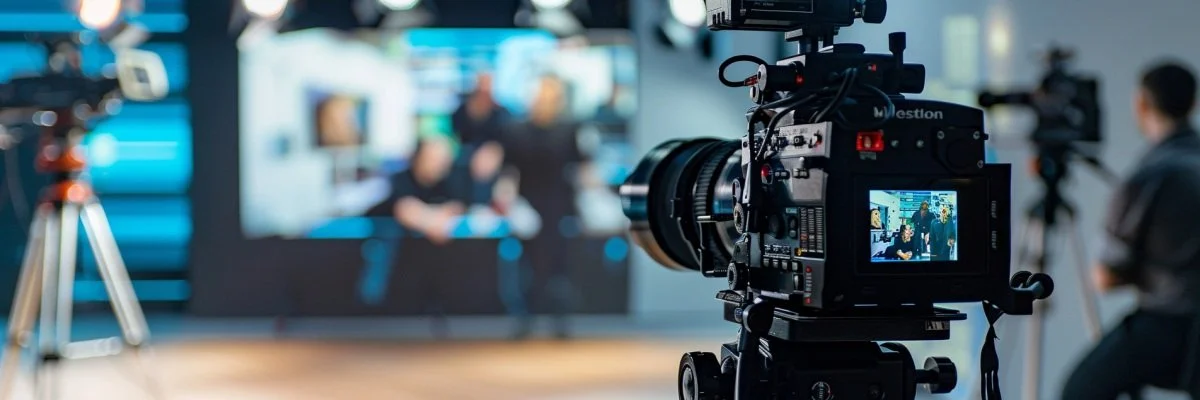
2026 Hybrid Event Trends for Smart Organizations
Executive takeaway: Less Zoom fatigue. More intentional production.
Live streaming didn’t disappear after the pandemic — it matured.
In 2026, the organizations doing this well aren’t chasing trends or shiny tech. They’re being deliberate. Strategic. Purpose-driven. And frankly, more realistic about what audiences expect.
Here’s what smart organizations are doing differently — and why it matters.
1. They’ve Stopped Treating Live Streaming Like a Video Call
Zoom has its place. Board meetings. Internal check-ins. Quick updates.
But when it comes to external-facing events — conferences, AGMs, public consultations, training sessions — smart organizations recognize that a video call isn’t a broadcast.
In 2026:
Camera angles matter
Audio quality is non-negotiable
Lighting and staging are part of the message
Audiences don’t say it out loud, but they feel the difference immediately.
2. They Design for Attention, Not Attendance
Attendance numbers are no longer the KPI that matters.
Engagement is.
Forward-thinking teams are:
Shortening sessions
Tightening agendas
Designing content for on-demand replay
Accepting that people will come and go — and planning for it
The goal isn’t to hold someone hostage for three hours. It’s to deliver value in the time they choose to give you.
3. They Build Events for Reuse, Not One-Time Consumption
The smartest shift happening right now? Treating live streams as content engines, not one-off events.
Organizations are intentionally capturing:
Clean speaker feeds
Slide-synced recordings
Highlight clips
Evergreen training assets
One event now fuels months of internal and external communications. That’s not a nice-to-have anymore — it’s ROI.
4. They’ve Accepted That Hybrid Is a Skill, Not a Checkbox
“Hybrid event” used to mean “we turned on a stream.”
In 2026, that mindset fails.
Smart organizations understand:
In-room audiences and remote audiences have different needs
A single camera at the back of the room doesn’t serve either well
Someone must actively manage the broadcast experience
Hybrid works when it’s intentionally produced, not improvised.
5. They Plan for Failure — So No One Notices It
The most successful live streams look effortless.
That’s not luck.
Behind the scenes, smart teams are planning for:
Internet drops
Mic failures
Laptop issues
Speaker surprises
Redundancy, rehearsals, and experienced operators are what separate a calm event from a public scramble. Viewers never see the saves — and that’s exactly the point.
The Bottom Line
Live streaming in 2026 isn’t about doing more.
It’s about doing it better.
Less fatigue.
More intention.
Higher production value where it actually counts.
Organizations that understand this aren’t chasing attention — they’re earning it.
__________________________
If you’re planning live or hybrid events this year, the real question isn’t “Should we stream?”
It’s “How do we do this in a way that reflects our brand, our audience, and our standards?”
Visit our home page.